
Restoring Your Walls: A Step-by-Step Guide to Professional Drywall Repair
Drywall damage, from minor dents to larger holes, is an inevitable part of property ownership and maintenance. While unsightly, repairing and restoring your walls to a seamless finish is a straightforward process achievable by any motivated individual. This guide breaks down the essential steps for patching, sanding, and painting to achieve a professional, lasting repair.
Phase 1: Assessment and Preparation
Before starting, clear the area and gather your materials: joint compound (spackle for very small dings, mud for larger repairs), patching material (mesh, metal patch, or drywall piece), utility knife, sanding block or sponge, primer, and paint.
- Small Dents or Dings (e.g., nail pops): These minor imperfections usually require only a simple application of lightweight spackle or joint compound.
- Medium Holes (e.g., doorknob dents): For holes up to about 3 inches in diameter, a self-adhesive mesh or metal drywall patch is the fastest and easiest solution.
- Large Holes (e.g., fist-sized): These require cutting out the damaged area and fitting a new piece of drywall, secured either with backing strips or by using a “California Patch” technique.
Phase 2: Patching and Filling
The key to a successful repair is a strong, stable base that is flush with the existing wall.
- For Small Dents: Apply a small amount of joint compound directly into the dent using a putty knife. Scrape off any excess so the compound is level with the wall surface.
- For Medium Holes (Using a Patch):
- Slightly sand the area around the hole to ensure the patch adheres well.
- Apply the self-adhesive patch, ensuring the hole is completely covered and the patch lays flat against the wall.
- Apply a thin, even layer of joint compound over the entire mesh/metal patch, feathering the edges outward (making the compound thinner as it moves away from the center). This technique helps the repair blend seamlessly.
- For Large Holes (Using a Drywall Piece):
- Cut the damaged section into a neat square or rectangle.
- Cut a matching piece of new drywall to fit exactly into the opening.
- Secure the new piece using backing strips (small pieces of wood or drywall placed behind the existing wall and screwed in) or by carefully applying compound around the edges (California Patch).
- Apply fiberglass mesh tape or paper joint tape over the seams and cover with the first coat of joint compound, extending the compound several inches beyond the patch edges.
Phase 3: Sanding and Feathering (The Art of Blending)
Patience is crucial in this phase. You must wait for the compound to fully dry between coats—this can take several hours depending on humidity and the compound’s thickness.
- First Sanding: After the first coat is completely dry, use a fine-grit sanding block (120-150 grit) to lightly sand the surface. The goal is to smooth out any ridges or high spots, ensuring the repair area is as flat as possible. Do not sand down to the patch or tape.
- Second/Third Coat: Apply a second (and potentially a third) thin coat of joint compound. With each subsequent coat, use a wider trowel and extend the feathered edges further out (often 6-12 inches beyond the patch). This wider feathering is what eliminates the visible transition line between the repair and the original wall.
- Final Sanding: Once the final coat is perfectly dry, perform a very light sanding (using 180-220 grit) to achieve a glass-smooth finish. Run your hand over the repair—if you can feel a ridge, the repair will be visible after painting.
Phase 4: Priming and Painting
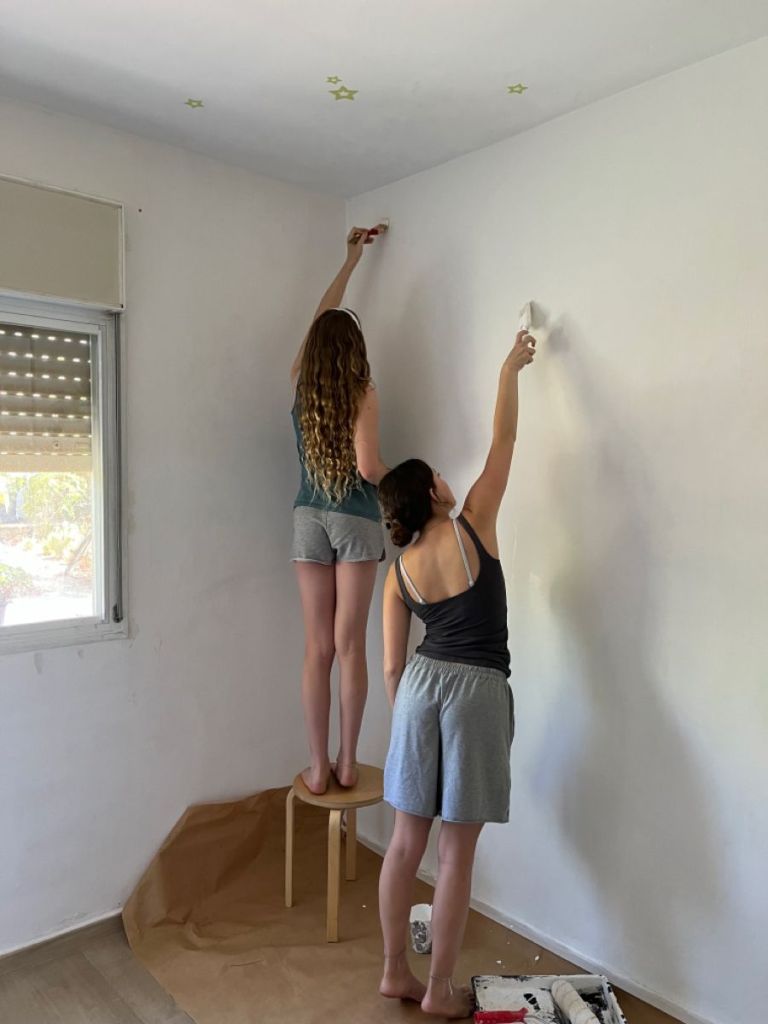
Proper preparation at this stage guarantees the repair disappears into the wall.
- Cleaning: Wipe down the entire repair area with a damp cloth or tack cloth to remove all sanding dust. Dust will prevent the primer and paint from adhering correctly.
- Priming: Always apply a coat of high-quality primer-sealer to the repaired area. Joint compound is highly porous and will absorb paint differently than the surrounding wall, leading to a visible “flash” or dull spot if not sealed first.
- Painting: Apply the matching paint to the primed area. It is often best to paint the entire wall corner-to-corner to ensure a uniform color and sheen, as even the exact same paint can look slightly different when applied at different times.
 Toronto Easy Task Solutions Insured Handyman